The choice of coffee brewing method represents a foundational decision for any cafe, extending far beyond mere beverage preparation. It directly shapes the flavor profile, influences operational efficiency, dictates equipment investment, and ultimately defines the customer's overall experience and perception of the brand. Understanding these distinctions is crucial for establishing a cafe's identity and meeting specific market demands, whether the goal is speed, artisanal quality, or a unique flavor signature.
The Foundational Impact of Brewing on Flavor Profile
Each brewing technique extracts soluble compounds from coffee grounds differently, leading to distinct sensory outcomes. These variations in extraction efficiency, temperature control, and contact time directly influence the acidity, body, sweetness, and clarity of the final cup.
Immersion Methods: Full-Bodied and Rich
Immersion brewing, where coffee grounds steep completely in hot water, typically yields a heavier body and a more robust flavor. The prolonged contact time allows for a fuller extraction of solids, often resulting in a richer, sometimes sediment-laden cup.
- French Press: Grounds are fully submerged, leading to a brew rich in oils and fine particulates that contribute to a viscous mouthfeel. Flavors are often described as bold, earthy, and less acidic.
- Cold Brew: This method uses cold water over an extended period (12-24 hours) to extract flavor. The low temperature minimizes the extraction of acidic compounds, resulting in a naturally sweeter, smoother concentrate with significantly lower acidity and a heavy body.
Best for: Cafes aiming for a comforting, traditional coffee experience with pronounced, less nuanced flavors, or those catering to customers sensitive to acidity.
Pour-Over Methods: Clarity and Nuance
Pour-over brewing involves pouring hot water slowly and precisely over coffee grounds, allowing gravity to draw the liquid through a filter. This controlled, single-pass extraction emphasizes clarity, highlighting the intricate aromatic compounds and origin characteristics of the beans.
- Chemex: Known for its thicker filter, which traps more oils and fine particles, producing an exceptionally clean, bright cup with low bitterness and a delicate body.
- V60: Its conical shape and large hole promote a faster flow rate, often resulting in a more vibrant acidity and a lighter body, showcasing the specific nuances of single-origin coffees.
Best for: Cafes specializing in high-quality, single-origin beans and lighter roasts, appealing to customers who appreciate subtle flavor notes and a clean finish. This method often involves a more theatrical, engaging preparation process.
Pressure-Based Methods: Intensity and Versatility
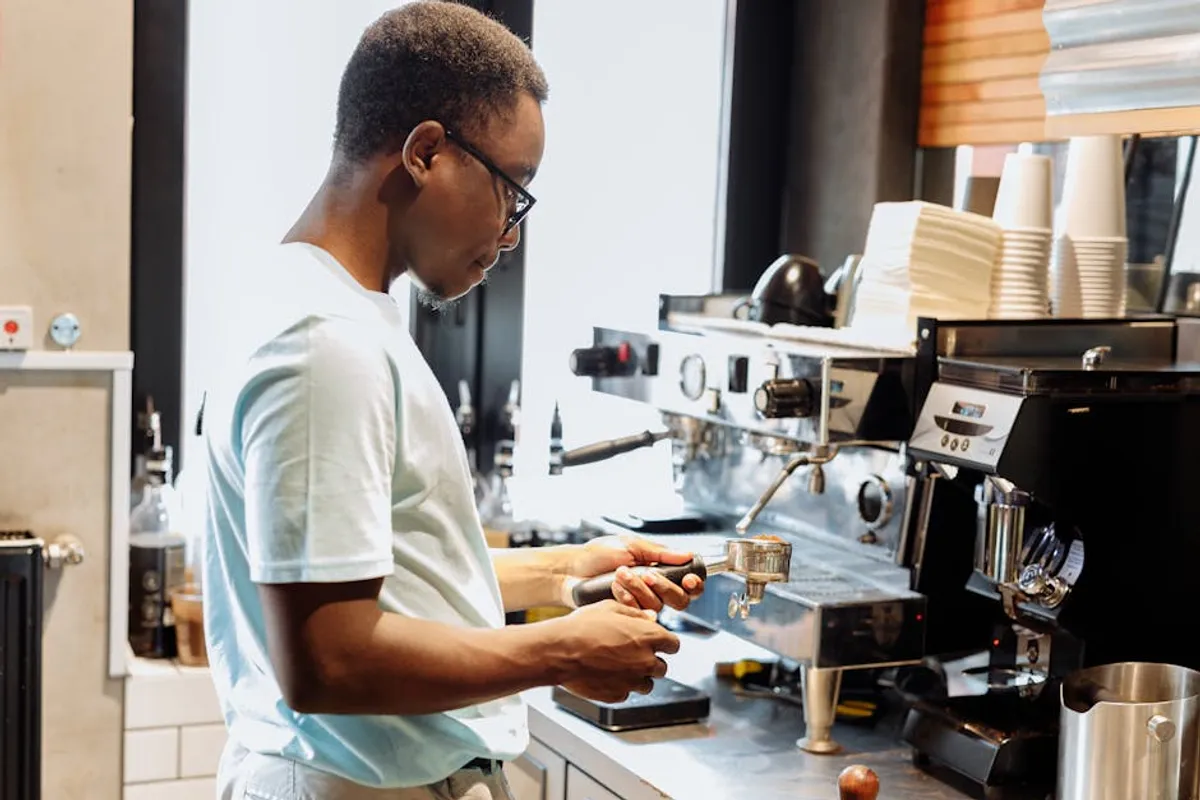
Espresso machines force hot, pressurized water through finely ground coffee, producing a concentrated shot. This rapid, high-pressure extraction creates a unique beverage with a dense body and a distinctive crema.
Espresso: The method excels at creating a highly concentrated, aromatic coffee with a complex flavor profile. It serves as the foundation for a vast array of milk-based drinks (lattes, cappuccinos) and offers intense flavor in a small volume. The extraction parameters (pressure, temperature, grind size, time) are critical for quality control.
Best for: Cafes with high customer volume, a diverse menu of coffee beverages, and a need for speed. Espresso forms the backbone of modern cafe operations, enabling a wide range of offerings from a single base.
Automated Drip: Consistency and Efficiency
Automated drip brewers heat water and disperse it over a bed of coffee grounds, allowing gravity to filter the brew into a carafe. These machines are designed for convenience and consistency, often producing larger batches.
Best for: Cafes prioritizing consistent, large-volume production for standard coffee offerings, often found in high-traffic environments where speed and reliability are paramount over artisanal presentation.
Beyond Taste: Operational and Experiential Considerations
The choice of brewing method impacts more than just the taste; it influences the entire operational flow and customer interaction within a cafe.
- Customer Perception and Brand Identity: A cafe featuring pour-over methods signals a commitment to craft and quality, often attracting a discerning clientele willing to wait for a bespoke experience. An espresso bar implies speed, versatility, and a modern approach.
- Workflow and Speed of Service: Automated drip is fast for batch preparation. Espresso machines, while quick per shot, require skilled baristas and constant attention during peak hours. Pour-over methods are inherently slower, demanding more barista time per cup, which can impact queue times and customer flow.
- Equipment Investment and Maintenance: Espresso machines represent a significant upfront investment and require regular, specialized maintenance. Pour-over setups are less costly initially but demand more manual labor. Cold brew systems require dedicated steeping space and filtration.
- Training Requirements: Mastering espresso preparation, including grind adjustment, tamping, and milk frothing, requires extensive training. Pour-over methods demand precision in water temperature, pour rate, and bloom timing. Drip coffee is comparatively simpler to operate consistently.
Pro Tip: When selecting brewing methods, balance the desire for artisanal quality with the practical realities of your cafe's volume and staffing capabilities. An overly complex menu of brewing options can strain resources and slow service, potentially detracting from the customer experience rather than enhancing it.
Crafting the Cafe Experience Through Method Selection
Thoughtful selection of brewing methods allows a cafe to curate a specific experience. A cafe might offer a single, signature method to streamline operations and reinforce a niche identity, or it might present a curated selection to cater to diverse preferences and highlight different aspects of coffee. The interaction between barista and customer during preparation, the aroma filling the space, and the visual presentation of the drink all contribute to the cafe's unique atmosphere.
Key factors for method selection include:
- Target customer demographic and their preferences
- Desired menu complexity and drink variety
- Available physical space and layout
- Budget for equipment acquisition and ongoing maintenance
- Staffing levels and training capabilities
- The specific brand image and narrative the cafe aims to convey
Strategic Method Integration for Cafe Success
The decision regarding coffee brewing methods is a strategic one, directly influencing a cafe's market positioning and profitability. By aligning chosen methods with the cafe's core values, operational capacities, and target customer experience, owners can build a compelling brand narrative. Whether emphasizing speed and consistency, artisanal craft, or a broad spectrum of choices, each method contributes to the overarching cafe experience, making it a critical element in attracting and retaining a loyal customer base. Exploring different coffee brewing methods allows cafes to craft unique customer experiences and build a strong brand identity.
Frequently Asked Questions About Coffee Brewing Methods
Does the brewing method affect caffeine content?
Yes, brewing methods can influence caffeine levels. Espresso, while concentrated, is served in small volumes, so a single shot might contain less caffeine than a large cup of drip coffee. Cold brew, due to its long extraction time, often has a higher caffeine concentration per ounce, though it's typically diluted before serving.
Can a cafe offer multiple brewing methods?
Many successful cafes offer a selection of brewing methods, such as espresso for milk-based drinks and pour-over for single-origin filter coffees. This allows them to cater to a broader range of customer preferences and showcase different aspects of coffee while balancing operational complexities.
How do I choose the right method for my cafe?
Consider your target audience, desired speed of service, available budget for equipment and training, and the specific flavor profiles you wish to highlight. A high-volume cafe might prioritize automated drip and espresso, while a specialty cafe might focus on pour-over and unique immersion techniques.