
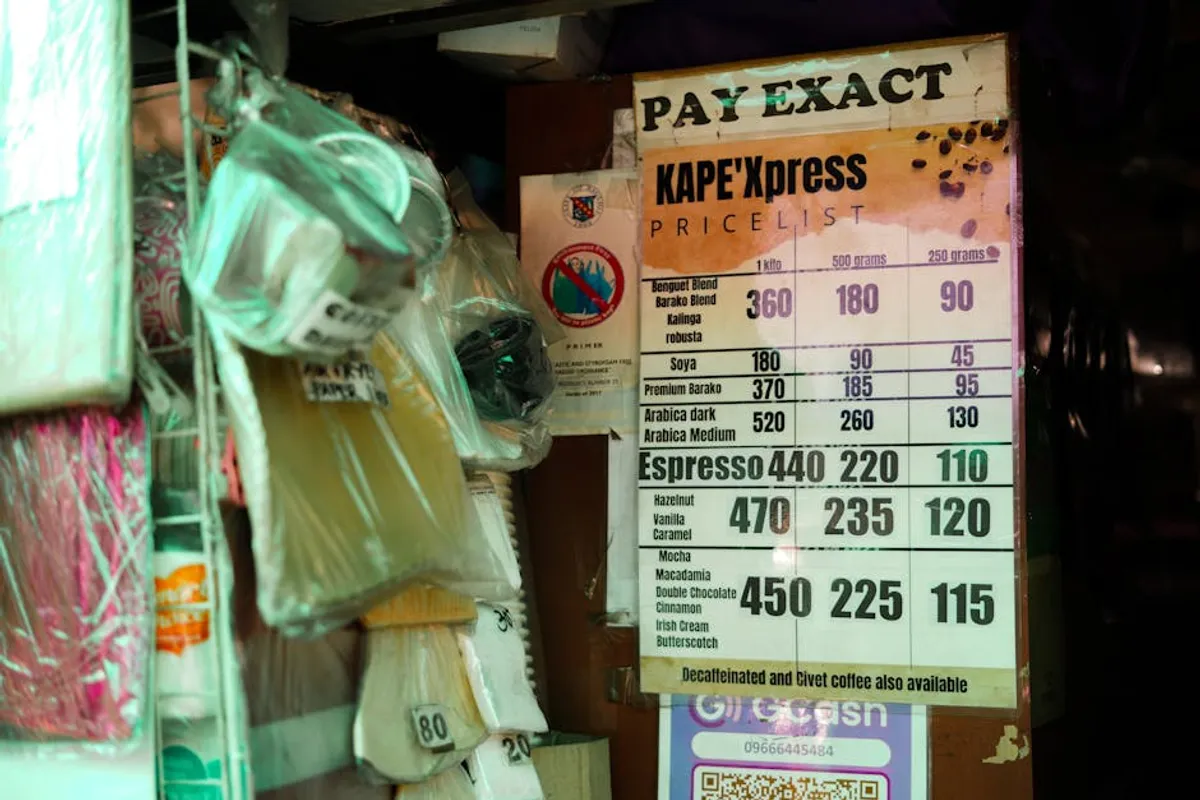
Setting the right price for coffee drinks moves beyond simply covering ingredient costs. Sustainable profitability in a competitive market demands a strategic approach that balances raw material expenses, operational overhead, perceived customer value, and local market dynamics. Underpricing erodes margins, while overpricing alienates customers, making a precise pricing strategy critical for long-term business health.
Calculating Your True Costs
Profitability begins with a precise understanding of your cost structure. This involves dissecting both the direct expenses associated with each drink and the indirect costs of running your operation.
Direct Costs (Cost of Goods Sold - COGS)
These are the expenses directly tied to producing a single coffee drink. Accuracy here is paramount.
- Coffee Beans: Calculate the cost per gram of espresso or brewed coffee. For example, if a 12oz latte uses 18g of espresso, and your beans cost $25/kg, the coffee cost is $0.45.
- Milk/Alternative Milks: Determine the cost per ounce. A 12oz latte might use 10oz of milk. If milk costs $0.02/oz, that's $0.20.
- Syrups & Flavorings: Calculate cost per pump. If a pump is $0.15, factor that in.
- Disposable Supplies: Cups, lids, sleeves, stirrers, sugar packets. These often seem small but add up. A typical cup/lid/sleeve set might cost $0.15-$0.25.
Summing these gives you the raw COGS for each drink. For the example latte: $0.45 (coffee) + $0.20 (milk) + $0.15 (cup set) = $0.80 COGS. This is your absolute minimum price floor.
Indirect Costs (Operating Expenses)
These are the fixed and variable costs of running your coffee business, which must be allocated across all sales.
- Rent/Lease: Monthly cost.
- Utilities: Electricity, water, gas, internet.
- Labor: Wages, salaries, benefits for baristas, managers.
- Marketing & Advertising: Promotional efforts, social media.
- Equipment Maintenance & Depreciation: Espresso machine service, grinder repairs.
- Insurance & Licenses: Business insurance, health permits.
To allocate these, sum your total monthly operating expenses. Then, estimate your total monthly sales volume (number of drinks). Dividing total operating expenses by total drinks sold gives you an average operating cost per drink. For instance, if monthly operating expenses are $10,000 and you sell 10,000 drinks, the operating cost per drink is $1.00. This must be added to your COGS to get a more complete cost basis.
Pro Tip: Account for Waste and Spoilage. Your COGS calculations should factor in a percentage for spillage, over-portioned shots, or expired milk. A 5-10% buffer on ingredient costs is a realistic adjustment to prevent underestimation of true costs.
Analyzing Market and Competitors
Understanding your costs is foundational, but market context dictates what customers are willing to pay and what competitors charge.
Local Competitive Landscape
Survey prices at nearby coffee shops. Note their menu offerings, atmosphere, and perceived quality. This provides a benchmark. Are they a high-end specialty cafe, a quick-service drive-thru, or a neighborhood spot? Your pricing should reflect your position relative to these competitors. If your quality or service is superior, a slightly higher price may be justified. If you aim for volume, competitive or slightly lower pricing might be appropriate.
Customer Perception and Value
Customers don't just pay for ingredients; they pay for convenience, experience, atmosphere, and perceived quality. A well-crafted latte in an inviting space with excellent service commands a higher price than a utilitarian cup of coffee from a self-serve dispenser. Consider your target demographic's income level and their willingness to pay for premium experiences or specific product attributes (e.g., organic, ethically sourced).
Implementing Strategic Pricing Models
Once costs are clear and market dynamics understood, select a pricing strategy.
Cost-Plus Pricing (Baseline)
This is the simplest method: COGS + Operating Cost per Drink + Desired Profit Margin. If your latte costs $0.80 (COGS) + $1.00 (operating) = $1.80 total cost. To achieve a 30% profit margin, you'd aim for a selling price of $1.80 / (1 - 0.30) = $2.57. While straightforward, this method often ignores market realities and customer value perception.
Value-Based Pricing
This strategy sets prices primarily based on the perceived value to the customer, rather than solely on cost. For unique, high-quality, or specialty drinks, customers may be willing to pay a premium. This requires a strong brand, consistent quality, and an exceptional customer experience to justify higher price points.
Competitive Pricing
Set prices in line with, slightly above, or slightly below competitors.
- Parity Pricing: Match competitors, often used when products are similar and differentiation is minimal.
- Premium Pricing: Set higher prices if you offer superior quality, unique ingredients, or a distinct experience.
- Penetration Pricing: Initially lower prices to attract customers and gain market share, then gradually increase.
Psychological Pricing
Utilize pricing tactics that appeal to customer psychology. Ending prices in.99 (e.g., $4.99 instead of $5.00) can make an item appear cheaper. Offering tiered pricing (small, medium, large) can anchor customers to the middle option, which is often the most profitable.
Optimizing for Profitability
Pricing is not static; it requires continuous optimization.
Menu Engineering
Analyze sales data to identify "stars" (high profit, high sales) and "puzzles" (high profit, low sales). Position stars prominently on your menu. For puzzles, consider promotions or re-evaluation. Eliminate "dogs" (low profit, low sales) or "plows" (low profit, high sales) where possible, or find ways to increase their profitability.
Upselling and Add-ons
Train staff to suggest extra shots, alternative milks, flavor syrups, or pastry pairings. These add-ons often have high-profit margins and can significantly boost average transaction value without altering base drink prices.
Portion Control and Inventory Management
Strict portion control for ingredients like milk, syrup, and even ice minimizes waste and ensures consistent COGS per drink. Effective inventory management reduces spoilage and prevents over-ordering, directly impacting your bottom line.
Building a Profitable Coffee Menu
Regularly review your pricing structure, at least quarterly or whenever ingredient costs fluctuate significantly. Monitor key performance indicators (KPIs) such as gross profit margin per drink, average check size, and customer feedback. Be prepared to adjust prices as market conditions, operational costs, or competitive landscapes change. Small, incremental adjustments are often more palatable to customers than large, infrequent price hikes. A dynamic pricing strategy, informed by data and market awareness, ensures your coffee business remains profitable and competitive.
Frequently Asked Questions
How often should I review my coffee drink prices?
Review prices at least quarterly, or immediately if there are significant changes in your ingredient costs (e.g., coffee bean prices, milk prices) or operating expenses (e.g., rent increase, new labor laws).
What is a good profit margin for coffee drinks?
While COGS for coffee drinks can be low, a healthy gross profit margin typically ranges from 60-80% on individual drinks. However, net profit margins will be significantly lower after accounting for all operating expenses, aiming for 10-20% net profit is a common goal in the food and beverage industry.
Should I offer discounts or loyalty programs?
Discounts and loyalty programs can drive volume and customer retention, but they must be carefully calculated to avoid eroding profit. Ensure that any discount still covers your COGS and contributes positively to overhead, or that the increased volume sufficiently compensates for the reduced margin per sale.
How do I communicate price changes to customers?
Communicate price changes clearly and transparently, ideally with a brief explanation (e.g., "due to rising ingredient costs"). Display updated menus promptly and train staff to answer customer questions politely. Gradual, small increases are generally better received than sudden, large ones.