Bottom line: A great café is identifiable within five minutes of walking in. Six signals do most of the work — and they're the same six in every city.
1. They name the roaster
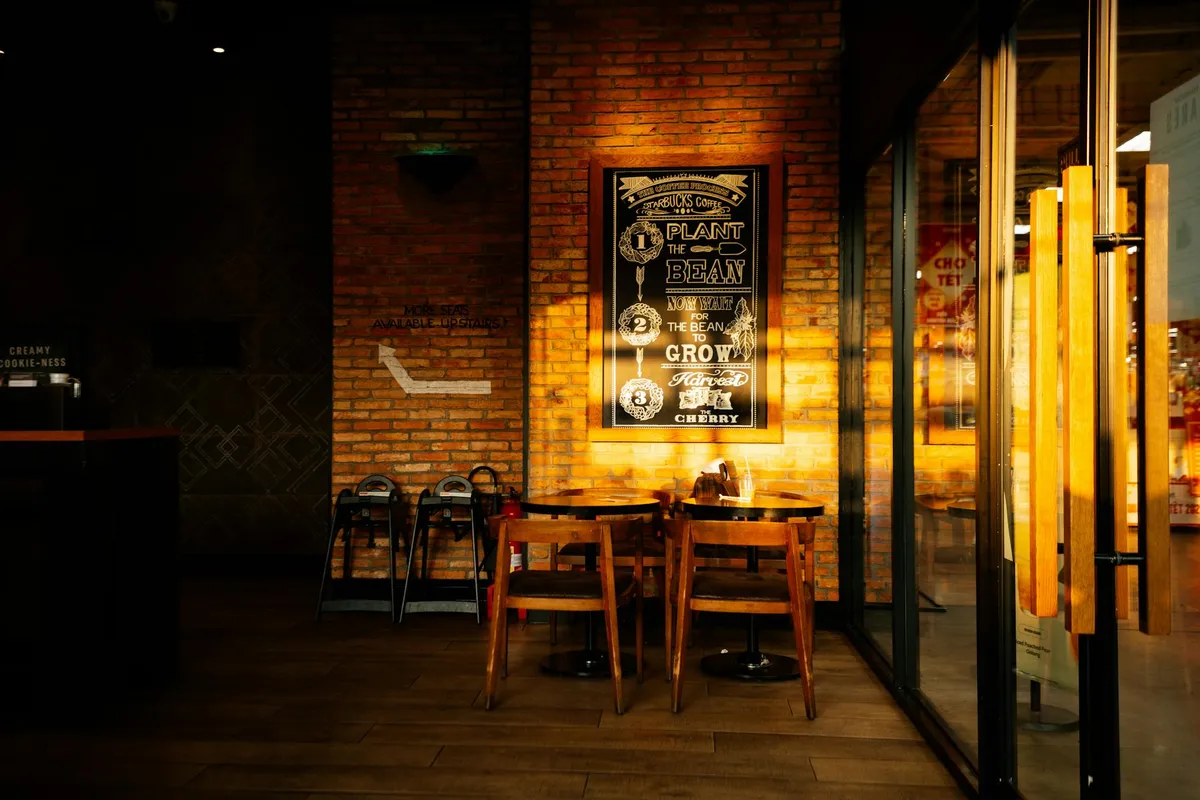
Mediocre cafés use generic "espresso." Great cafés tell you whose coffee they're serving — on a chalkboard, on the menu, on the bag near the espresso machine. Naming the roaster signals taste, accountability, and that someone actually cares.
2. Espresso comes with sparkling water
It's a small thing. It tells you the staff has been to other cafés that take espresso seriously, and that they've absorbed the conventions. The presence of the water glass is more diagnostic than the espresso itself.
3. The grinder is on, not just sitting there
Great cafés grind to order. You'll hear the grinder running. Mediocre cafés have ground beans sitting in a hopper from breakfast. The smell hits you when you walk in if it's done right.
4. The barista asks how you want your milk
Not "milk or oat milk?" — anyone asks that. The diagnostic question is "lighter or thicker?" or "wet or dry?" The barista who asks this knows that texture is part of a flat white.
5. The pastries come from a local bakery, not a wholesaler
Look at the pastry case. If everything looks identical to the place down the street, it's wholesale. If items are slightly varied, irregular, with a small label naming the bakery — they're curated.
6. Music isn't Spotify's "Coffee Shop Vibes" playlist
The default playlist signals nobody chose the music. A great café has someone's actual taste running. It might be jazz, it might be indie folk, it might be ambient — but it has a specific character.
What doesn't matter as much as you think
- Whether they have wifi. Some great cafés intentionally don't.
- Whether the menu has 47 drinks. Often the best cafés have fewer.
- Whether they have outlets at every seat. Cafés that optimize for laptops often skimp on coffee.
- Whether the décor is "Instagrammable." Often inversely correlated with quality.
The five-minute test
Walk in. Listen for the grinder. Look at the espresso pull (it should take 25-30 seconds). Read the menu for roaster credit. Watch the barista work.
Within five minutes you'll know whether to stay or finish your coffee and move on.