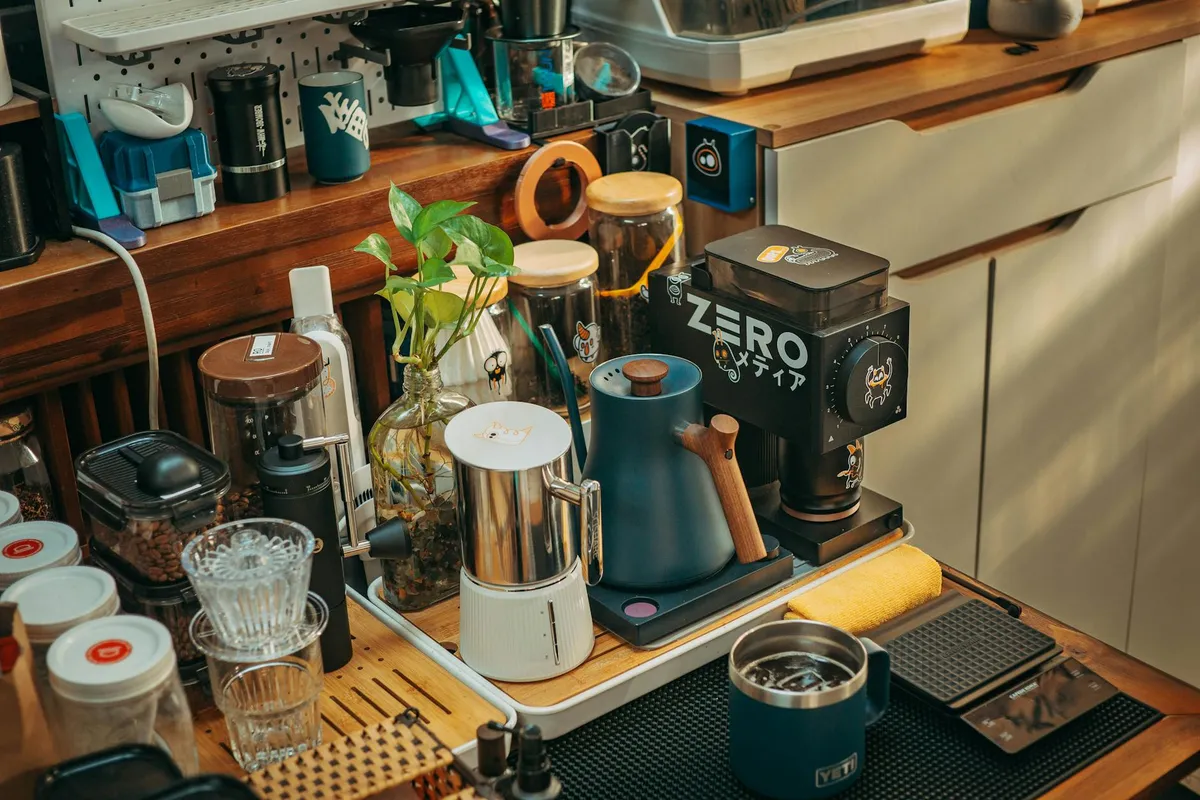
Bottom line: Most coffee upgrades produce marginal improvement. Ten produce real, taste-it-immediately improvement. Here's the order.
1. A real burr grinder (0-250)
The single highest-impact upgrade. Blade grinders chop unevenly; burr grinders cut consistently. The difference is bigger than every other upgrade combined.
Recommendation: Baratza Encore for $169. The standard answer for ten years and still right.
2. A digital scale with timer ()
Cheap. Transformative. Stop guessing ratios.
Recommendation: Hario V60 drip scale or any $25 scale with 0.1g precision and built-in timer.
3. A gooseneck kettle (-100)
Controls pour speed and direction. Makes pour-over actually pour-overable.
Recommendation: Fellow Stagg EKG ($165) if you have the budget; Bonavita variable-temp ($75) if you don't.
4. Whole-bean coffee from a real roaster (-22/bag)
This isn't equipment, but it's the second-biggest improvement after the grinder. Local roasters or quality online (Counter Culture, Sey, Tim Wendelboe).
5. A V60 or Kalita Wave dripper ()
The best entry-level brewer. Cheap, durable, makes great coffee, fixes most pour-over mistakes that cone-shape brewers cause.
6. A French press if you don't have one (-60)
Underrated. Full-immersion brewing produces a different cup than pour-over and is forgiving of grind inconsistency.
7. A WDT tool for espresso ()
If you make espresso, this single tool reduces channeling and inconsistency more than any other equipment fix. Cheap, simple, fixes real problems.
8. Bottled water for brewing (-2/gallon)
Tap water with high mineral content over-extracts. Soft water under-extracts. Bottled spring water (or filtered tap to specific specs) makes coffee taste like coffee.
9. A bean canister with one-way valve (-40)
Beans stay fresh roughly 50% longer in proper storage. AirScape canisters work; cheaper one-way valve bags from suppliers also work.
10. An entry-level espresso machine — only if you commit (0-700)
The line where coffee gets serious. The Breville Bambino Plus ($300-400) is the right starting point. Anything cheaper is a waste; anything pricier is overkill until you've outgrown the Bambino.
The order to buy these
- Whole-bean coffee from a real roaster (start here, even with no equipment)
- Digital scale ($25)
- Burr grinder ($169)
- Gooseneck kettle ($75)
- V60 dripper ($25)
Total: $295. That setup outperforms 90% of "coffee setups" people spend $1,500 on.
What's NOT on this list
- Coffee subscription services — overpriced; buy direct from roasters
- Espresso machines under $200 — they don't produce real espresso
- Smart kettles with apps — nice but not necessary
- Espresso scales with bluetooth — overkill until you're deep into espresso
Skip these. The $295 list above is genuinely the best $295 you can spend on coffee.